Buildings Cleared for the Next Development
Commercial Demolition in Longview for industrial and retail properties facing redevelopment or structural replacement
Redline Demolition handles full-scale commercial building teardown and site preparation across Longview and the broader East Texas corridor, managing everything from initial permits to final debris removal. The service addresses aging industrial facilities, obsolete retail structures, and mixed-use properties where renovation costs exceed replacement value. Longview's industrial and retail corridors often require fast project turnaround to meet redevelopment timelines, and licensed operators who coordinate material salvage workflows keep disposal costs predictable while maintaining site access for ongoing operations.
The process involves structural assessment, permit acquisition through local Longview offices, systematic deconstruction or full building collapse depending on surrounding property constraints, and managed debris separation that routes recyclable steel, concrete, and salvageable materials away from landfill loads. Mixed-use zoning in Longview often places commercial teardowns adjacent to active businesses or residential blocks, requiring controlled demolition methods and phased material removal to minimize disruption.
Schedule a site evaluation to review structural conditions, access constraints, and material handling requirements specific to your commercial property..
How Commercial Demolition Manages Permits and Debris On-Site
Redline Demolition coordinates permit applications directly with Longview municipal offices, eliminating the delays that occur when contractors wait on third-party approvals or incomplete documentation. Permits cover structural demolition, utility disconnection verification, and haul route authorization, and the timeline from application to approval typically spans seven to fourteen days depending on project complexity and whether asbestos or lead abatement pre-inspection is required.
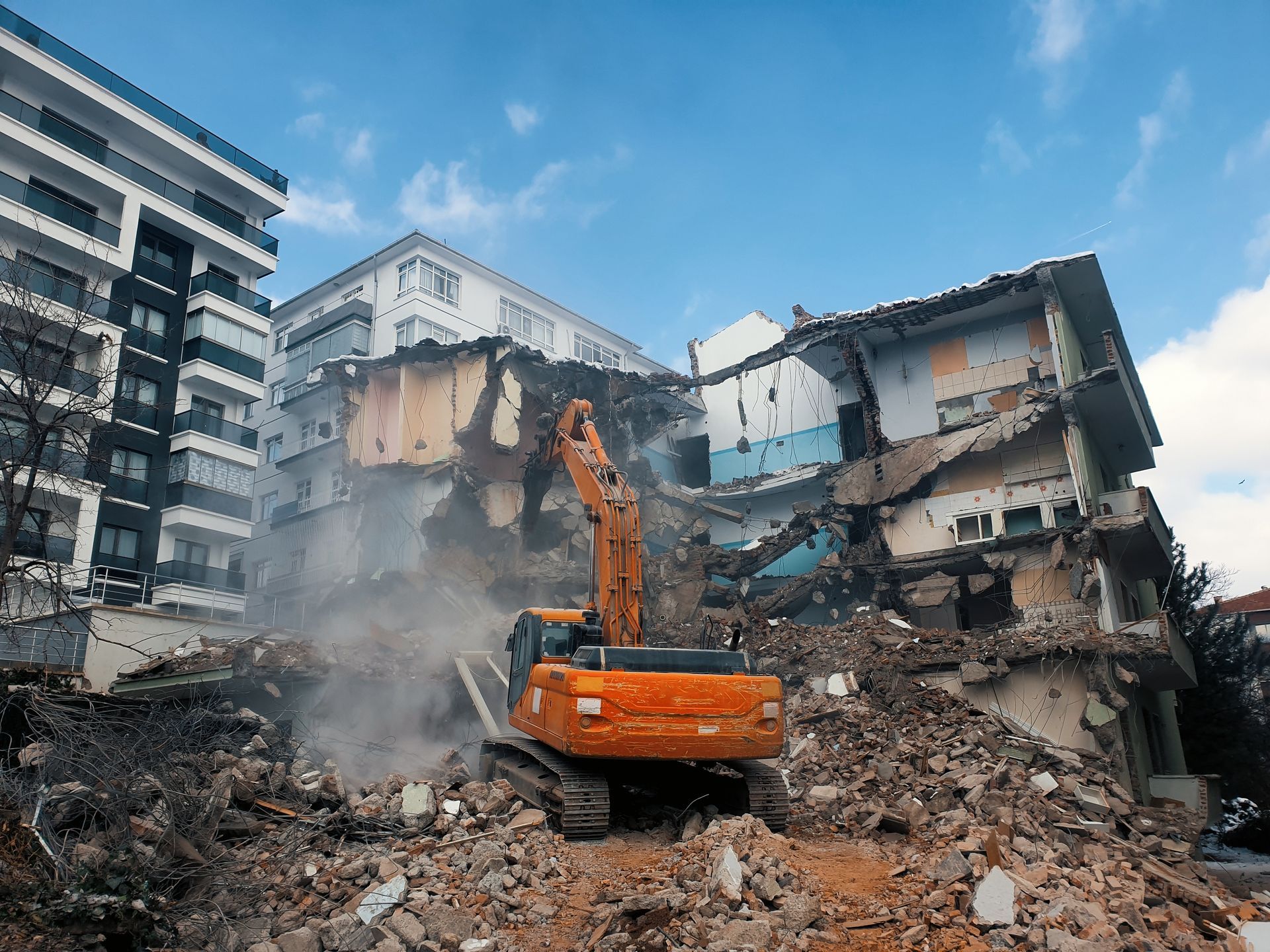
Once demolition begins, the site transitions from an occupied structure to a cleared, graded pad ready for new construction or sale. Debris is sorted on-site into salvageable metal that gets routed to scrap buyers, concrete that moves to recycling crushers, and mixed waste that goes to permitted landfills along East Texas haul routes. You'll notice organized material staging that keeps the site accessible for inspection, utility crews, or early-phase contractors without requiring additional cleanup before the next construction phase starts.
Material salvage decisions happen during planning rather than mid-project, which prevents cost overruns when unexpected steel quantities or reusable fixtures emerge during teardown. Selective deconstruction prioritizes high-value materials like structural steel beams, copper wiring, and intact HVAC components, while full structural collapse methods apply to buildings where salvage value doesn't justify the additional labor and timeline extension..
Questions About Commercial Building Teardown
Commercial demolition projects in Longview vary widely depending on building size, materials, and site access, and understanding what the process involves helps property owners plan redevelopment timelines and budget accurately.
What happens during the permit process for commercial demolition in Longview?
Redline submits structural plans, utility disconnection confirmations, and debris management routes to Longview municipal offices, and the approval timeline depends on whether the building requires hazmat pre-screening for asbestos or lead-based materials common in structures built before 1980.
How does selective deconstruction differ from full building collapse?
Selective deconstruction involves systematic removal of high-value materials like steel beams, copper components, and reusable fixtures before structural collapse, extending the timeline by several days but reducing disposal costs and generating salvage revenue that offsets labor.
What site conditions affect demolition methods in East Texas?
Proximity to active businesses, overhead power lines, and underground utilities require controlled demolition using hydraulic shears and segmented collapse rather than explosive methods, and clay soils common in Longview demand equipment with wide track bases to prevent site rutting during material staging.
How is debris separated and routed after commercial teardown?
Material gets sorted into steel for scrap buyers, concrete for recycling crushers, wood and drywall for landfill disposal, and hazardous waste for certified treatment facilities, with haul routes coordinated to avoid peak traffic periods along Longview industrial corridors.
What should property owners prepare before demolition starts?
Utility companies must confirm disconnection of gas, electric, water, and telecom lines, and any tenant belongings, hazardous materials, or equipment not part of the building structure need removal before the demolition crew arrives on-site.
Redline Demolition manages the full commercial teardown process from permit filing through final site grading, coordinating material salvage and debris removal to keep redevelopment projects on schedule. Request a project consultation to review your building's structural profile, permitting requirements, and material handling logistics tailored to your Longview site.