Spaces Stripped for Renovation Without Structural Risk
Interior Demolition in Longview for commercial retrofits and residential remodels requiring selective removal
Renovation and remodel projects in Longview's downtown commercial zones and residential neighborhoods require precise interior removal that preserves structural integrity while clearing walls, flooring, fixtures, and mechanical systems for replacement. Redline Demolition handles selective demolition that targets non-load-bearing partitions, ceiling finishes, and MEP rough-outs without compromising beams, columns, or exterior walls. The work addresses spaces where layout changes, system upgrades, or tenant improvements demand clean removal and staged debris handling that keeps the building envelope intact and allows immediate contractor handoff for the next phase.
Selective demolition involves identifying load-bearing versus partition walls, disconnecting electrical and plumbing lines at designated cut points, removing flooring down to subfloor or slab, and staging debris by material type to separate recyclable metal, salvageable fixtures, and landfill-bound waste. Longview commercial retrofits often involve asbestos-containing ceiling tiles or flooring adhesive in buildings constructed before 1990, requiring hazmat abatement coordination before general interior removal begins.
Request a site walkthrough to identify structural elements, hazmat screening needs, and material salvage opportunities within your interior demolition scope..
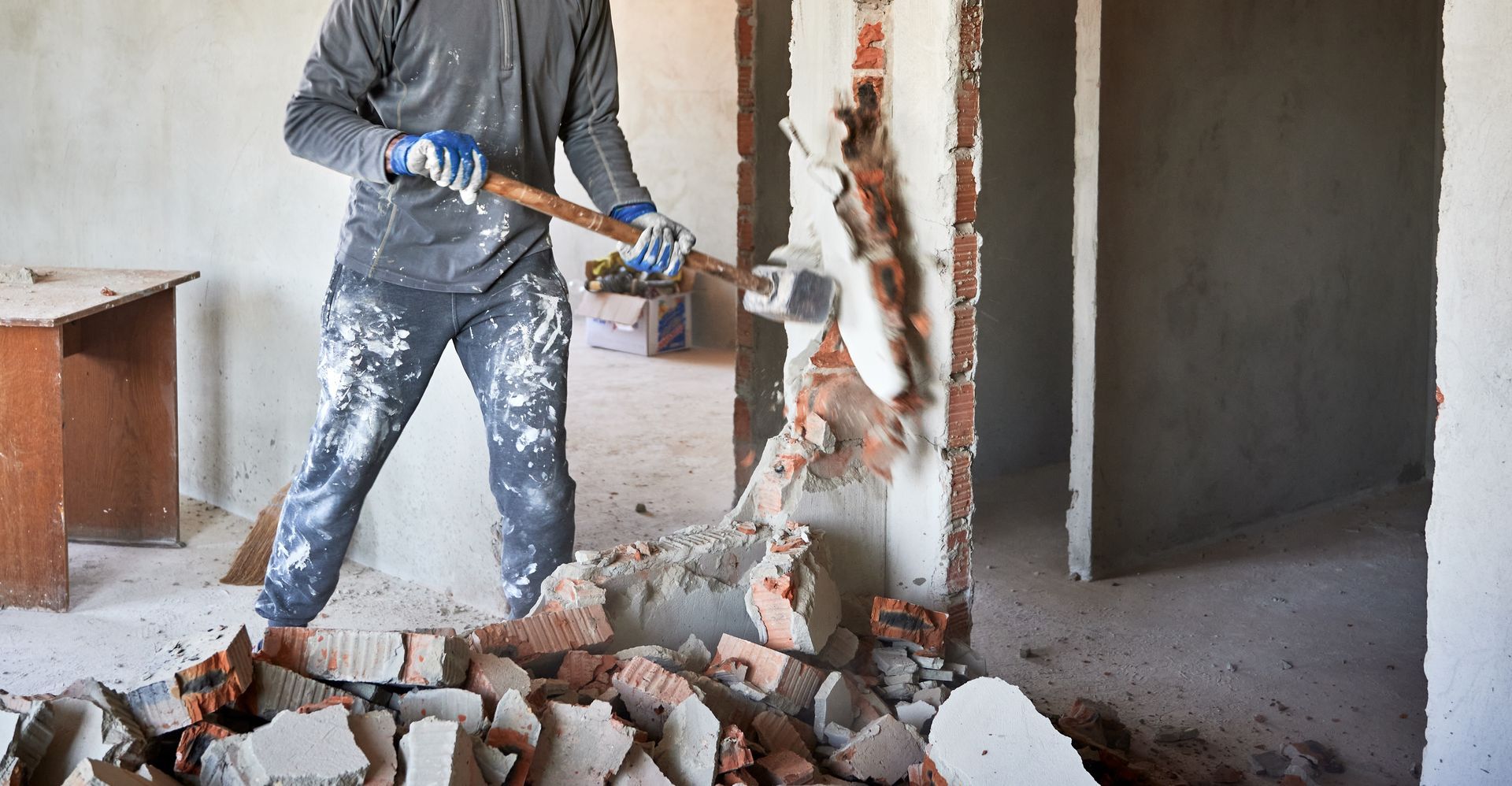
What You Notice Once Interior Removal Is Finished
The space transitions from finished rooms to exposed framing and systems, with studs, joists, and mechanical chases visible and ready for inspection or modification. Electrical wiring is cut back to panel locations or designated junction points, plumbing lines are capped at shut-off valves or main risers, and HVAC ductwork is removed or isolated depending on whether existing systems remain in service during renovation.
Debris is removed daily or staged in designated areas depending on building access and ongoing operations, preventing material accumulation that blocks contractor movement or creates safety hazards in active commercial spaces. You'll see clean subfloors free of adhesive residue, wall cavities cleared of old insulation or wiring, and ceilings opened to reveal structural decking or roof framing ready for new installation. Material salvage routing separates reusable fixtures like light housings, copper piping, and intact cabinetry from mixed demolition waste, reducing disposal costs and supporting sustainability goals for LEED or green building projects.
Selective demolition preserves structural members, which means renovation contractors avoid unexpected repairs or engineering reviews that arise when load-bearing elements get damaged during uncontrolled interior teardown. Staged removal also coordinates with phased renovation schedules, allowing partial building occupancy or sequential tenant improvements without requiring full building closure..
Common Questions About This Service
Interior demolition involves more decision-making than full structure teardown, and understanding what gets removed versus what stays in place helps property owners and contractors plan renovation workflows and avoid costly change orders.
How is selective demolition different from full building teardown?
Selective interior demolition removes only designated walls, finishes, and systems while preserving the building's structural frame, exterior envelope, and load-bearing components, requiring careful identification of what can be removed safely versus what supports the building.
What hazmat screening is required for Longview commercial interiors?
Buildings constructed before 1990 often contain asbestos in ceiling tiles, flooring mastic, or pipe insulation, and testing those materials before demolition begins prevents regulated waste mixing with general debris and avoids work stoppages during renovation.
How are MEP systems disconnected during interior demo?
Electrical lines are de-energized at breaker panels and cut back to junction boxes, plumbing is shut off at valves and capped to prevent leaks, and HVAC ducts are sealed or removed depending on whether existing systems continue serving other building areas during phased renovation.
What debris staging methods work for occupied buildings in Longview?
Material gets containerized in designated staging areas with daily haul-out schedules to prevent accumulation, and high-dust activities like drywall removal happen during off-hours or weekends to minimize disruption to adjacent tenants or ongoing business operations.
How does selective demolition speed up contractor handoff?
Removing only targeted elements and leaving structural framing exposed allows immediate inspection, measurement, and rough-in work by electrical, plumbing, and HVAC contractors without waiting for additional cleanup or structural assessment.
Redline Demolition separates demolition from renovation, providing clean interior removal and staged debris handling that reduces change orders and keeps Longview remodel projects on schedule. Schedule a consultation to review your building's structural layout, hazmat requirements, and material salvage options for your interior demo project.